What counts as natural
South Australia’s Burial and Cremation Act describes natural burial as burial in the ground with no chemical preservatives used on the body, and with the body contained only in a shroud or a biodegradable coffin. A cemetery may set part of its grounds aside as a natural burial ground, and such a ground issues interment rights in the same way as a cemetery (sections 3, 22 and 30).
In NSW, Cemeteries & Crematoria NSW describes a natural burial as one where the body is placed in the soil to break down naturally, with as little disturbance to the bushland as possible, so that the grave blends into the landscape over time. It also notes that not all cemeteries offer it.
Coffin, shroud or neither
Everything that goes into a natural grave has to break down. Cemeteries & Crematoria NSW says coffins, caskets and urns must be made from materials that are readily biodegradable, and gives cardboard, particle board, cane, bamboo and wicker as examples. A shroud is another common choice.
Burial without a coffin in NSW
A shroud on its own is not automatic in NSW. Under the Public Health Regulation 2022, a burial in a grave without a coffin needs the approval of the Secretary of NSW Health, either a standing approval or one for a single case, applied for through the local public health unit. NSW Health weighs the culture, beliefs and religious practice of the person and their family.
Where approval is given for a shrouded burial, NSW Health’s conditions include:
- the body is wrapped in a cloth or sheet that stops any leakage, and is prepared in a mortuary registered with the NSW Ministry of Health;
- the body is carried securely and with respect until it is placed in the grave;
- the cemetery has agreed to bury a body without a coffin, including how staff handle it on the grounds;
- a name plate is placed near the body in the grave;
- the person is known, or is reasonably believed, not to be infected with a prescribed infectious disease; otherwise the body is buried in a body bag and coffin.
NSW public health units can be reached on 1300 066 055, the number NSW Health gives for them.
Finding the grave again
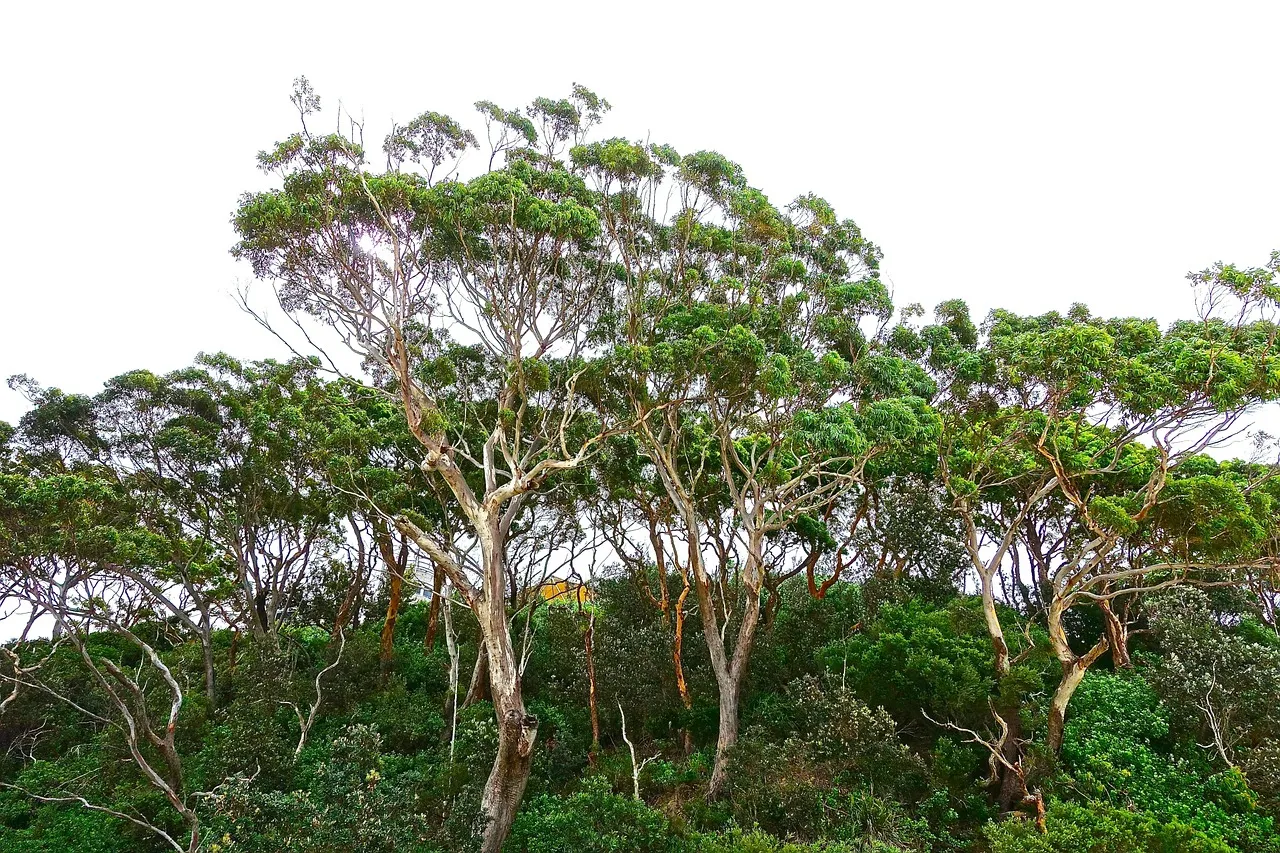
A grave meant to disappear into bush still has to be found, by family and by the cemetery’s own records. Cemeteries & Crematoria NSW says natural burial sites are generally recorded with GPS coordinates, which keeps the locations exact while the ground stays looking natural.
In South Australia, Adelaide Cemeteries Authority takes another route in its two natural burial areas. Each grave is micro-chipped, there is no marker at the grave itself, and families can have a name and date of death inscribed on a shared memorial stone. Anyone planning a visit is asked to get in touch first and allow 72 business hours for a temporary marker to be set out.
Markers, or none
What may mark a natural grave varies from one operator to the next. Cemeteries & Crematoria NSW describes the range it sees:
| Approach | What it looks like |
|---|---|
| A discreet memorial | A small memorial at the grave site, within the operator’s rules. |
| A natural marker | Something from the landscape: a rock, a wooden plaque, a tree or a native plant. |
| Names kept elsewhere | Nothing at the grave, with the names of those buried recorded on a shared feature nearby. |
| Nothing at all | A landscape left wholly natural, without memorials, markers or tributes. |
Questions a cemetery can answer
Cemeteries & Crematoria NSW suggests reading a cemetery’s policies and terms before choosing a natural burial, and visiting the site to see whether its look feels right. These are the points the official sources above show differ from place to place:
- Does the cemetery have a natural burial area, and can it be walked through first?
- Which coffins, shrouds and urns does it accept, and from which materials?
- What marker is allowed at the grave, if any, and is there a shared memorial for names?
- How is each grave located: GPS, a microchip, or the cemetery’s plan?
- Can the area take ashes as well as burials, and more than one person in a site?
- What interment right comes with the site, and for how long? (Section A covers rights.)
- In NSW, for a burial without a coffin: has the cemetery agreed, and has NSW Health given its approval?